Transcript
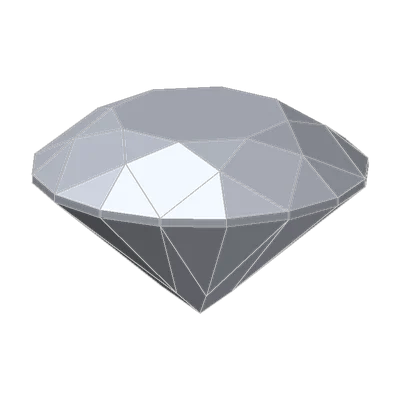
This 10-second clip has no sound. What you see:
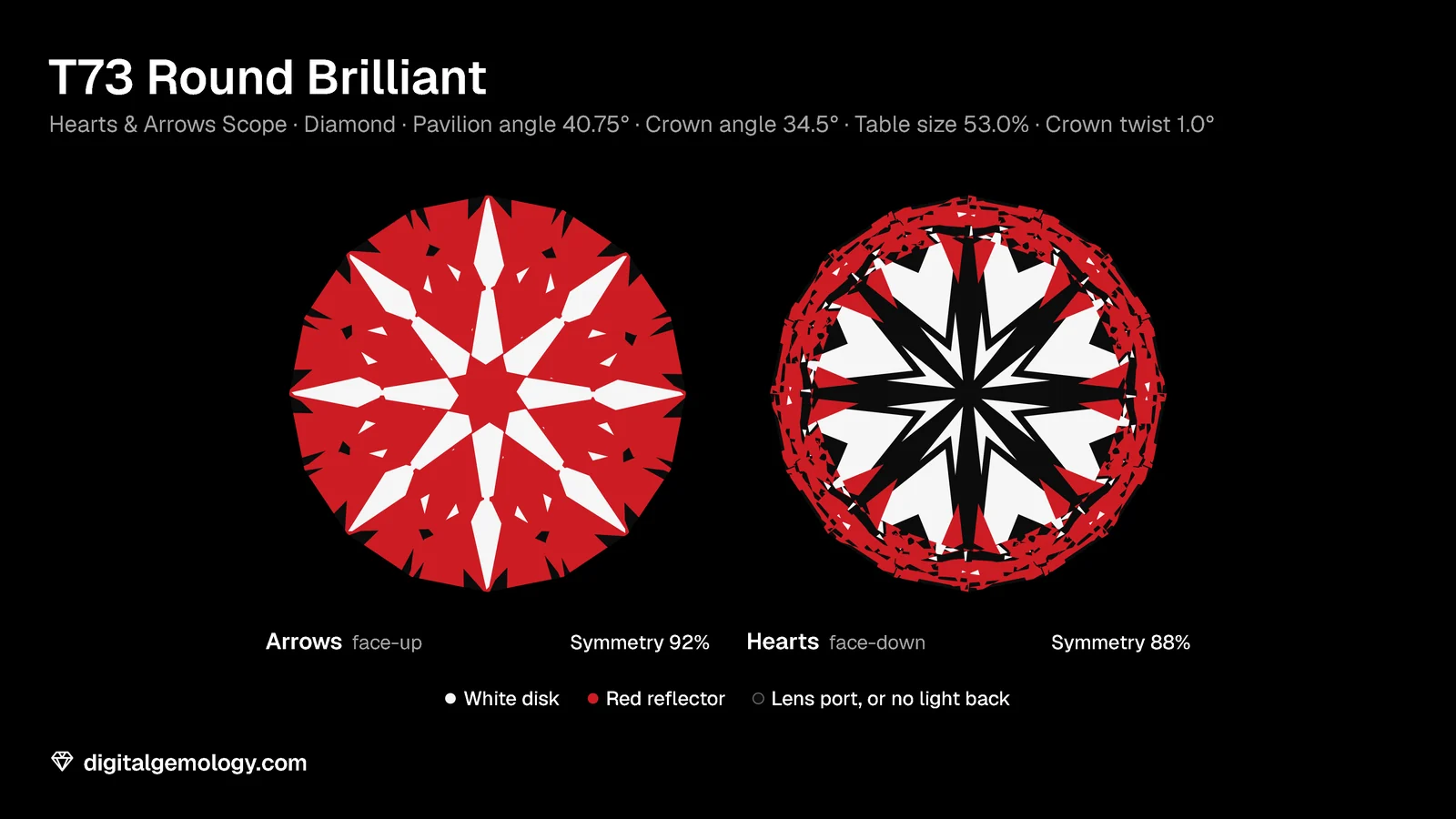
The T73 in the Hearts & Arrows Scope, arrows face up, turned over to the hearts.
Sixty quiet years
After Tolkowsky's 1919 cut, his proportions became the basis for the "ideal cut" standards that followed. One slow change matters here. Over the decades, the lower girdle facets grew longer. These are the long triangles on the pavilion, beside the mains. The pavilion mains between them grew narrower. Nobody did this to make hearts. It just happened to set the stage.
The next step didn't come from a new cutting tool. It came from a new way of looking.
The technology: the instrument came before the cut
Reflector viewers. Between 1977 and 1984, Ken Shigetomi and colleagues in Japan researched a viewer that judges a cut by the light it returns. It became the FireScope. A Japanese utility model published in 1985 describes a similar idea: a magnifier with its own light and a red disc with a hole in the middle. In it, red reflection reads as good brilliance.
Judged that way, very few stones passed. According to the EightStar account, a worldwide search through tens of thousands of diamonds found almost none that performed perfectly in the FireScope. So cutters started to cut stones for the viewer. The first EightStar was cut in Tokyo in 1985.
The name. A first copy, called Apollon 8, followed in 1987. The company behind it failed over quality control. One of its salesmen, Kinsaku Yamashita, bought the remaining stones and took over the subcontractors. In 1988, he renamed the cut Hearts and Arrows. Japan's Zenhokyo lab tells it differently: a Mr. K. Yamashita, president of Mount Gold Co., found the pattern by accident with a cut proportion scope. Both accounts lead back to Yamashita.
The viewer, patented. Yamashita filed a patent on his viewer in Japan in 1989 and in the US in 1990, granted in 1993 (US 5,260,763). It's a simple device. An opaque tube holds the stone over a black base. A white, semi-transparent tube above it limits the light that reaches the stone. What matters is the angle. Seen from the center of the stone, the rim of the tube should sit 10–25° off the axis, and the best patterns show at about 15–20°. A red inner wall colors the pattern. In the viewer, an ideal cut shows eight arrows face-up and eight hearts face-down; a poorly cut stone shows neither. The patent itself admits the optical principle isn't fully clear.
Into the market. EightStar opened in the US in 1990. Hearts On Fire was founded in Boston in 1996, and by 1997 US brands sold stones as hearts and arrows. In Japan, the Central Gem Laboratory registered its own name for the pattern, "Heart & Cupid".
How the pattern forms
- Arrows (face-up): the opposite pavilion main reflects each pavilion main, and that makes the shaft. The crown main adds a second view of that reflection, and that makes the arrowhead.
- Hearts (face-down): six facet reflections build each heart. Four, tied to the pavilion mains, form the body. Two upper-half facets square off the top of the heart.
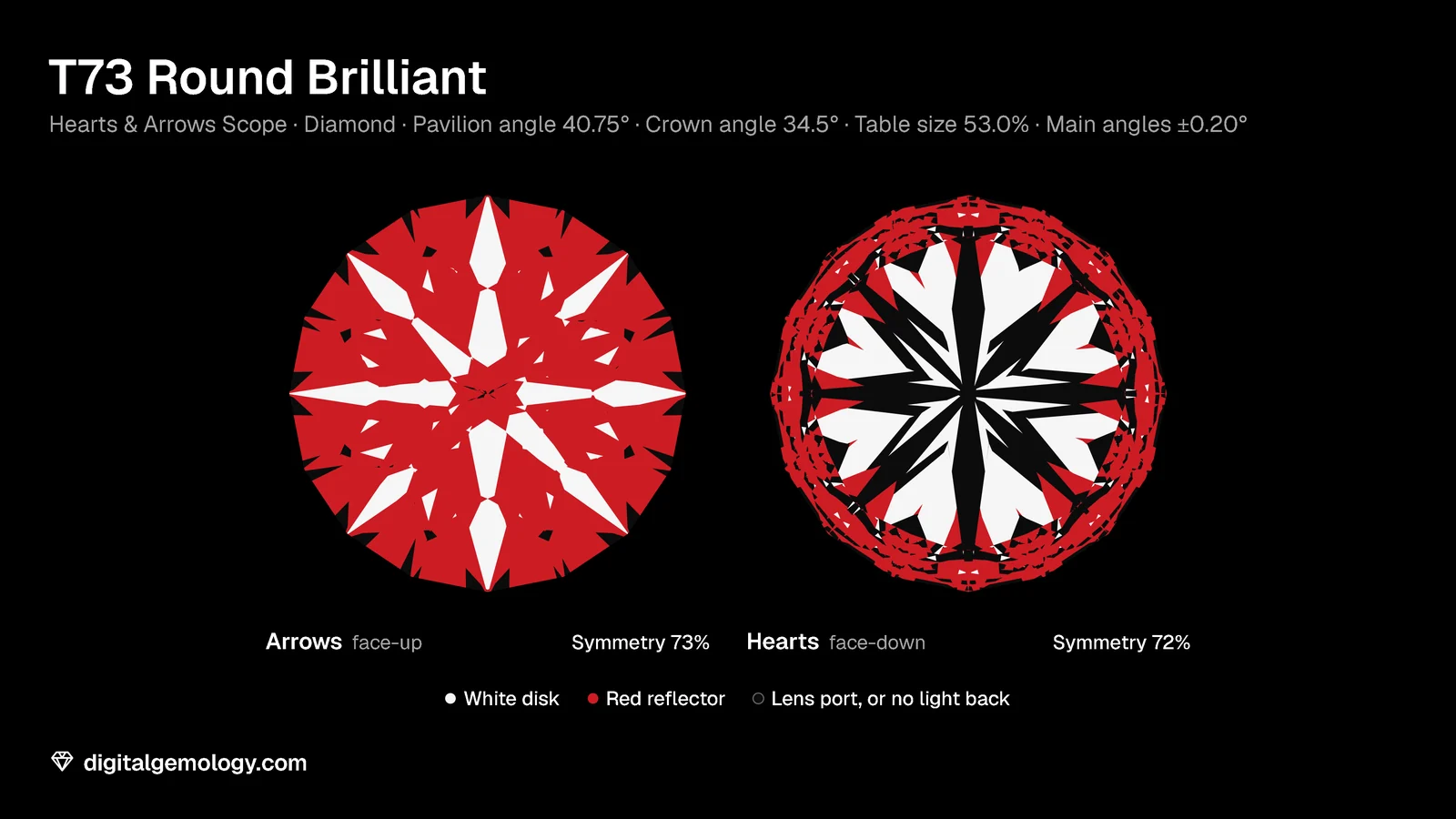
For all sixteen halves to match, opposite facets must line up in three dimensions: same angle and same direction around the stone. That's a stricter kind of symmetry than a lab's ordinary symmetry grade, which checks the facets as they sit on the surface. Small errors that you'd never see face-up break the pattern at once.
Lower halves shape the hearts. A common rule of thumb: lower halves at about 75% or less give fatter hearts with less gap between them. At 80% or more, the hearts are thinner, with more separation.
Try it yourself
- Open Hearts & Arrows Scope and choose the T73 round brilliant in diamond. Look at both views. Read the Arrows Symmetry and Hearts Symmetry numbers.
- Under Symmetry, turn up Crown twist a little, then Main angles, then Main spacing, one at a time. Watch which part of the pattern breaks first.
- Reset. Make the Table size much smaller, and then much larger. The Central Gem Laboratory says that a table that's too small spoils the heart shape, and one that's too large turns the hearts into a leaf shape. Does our Scope agree?
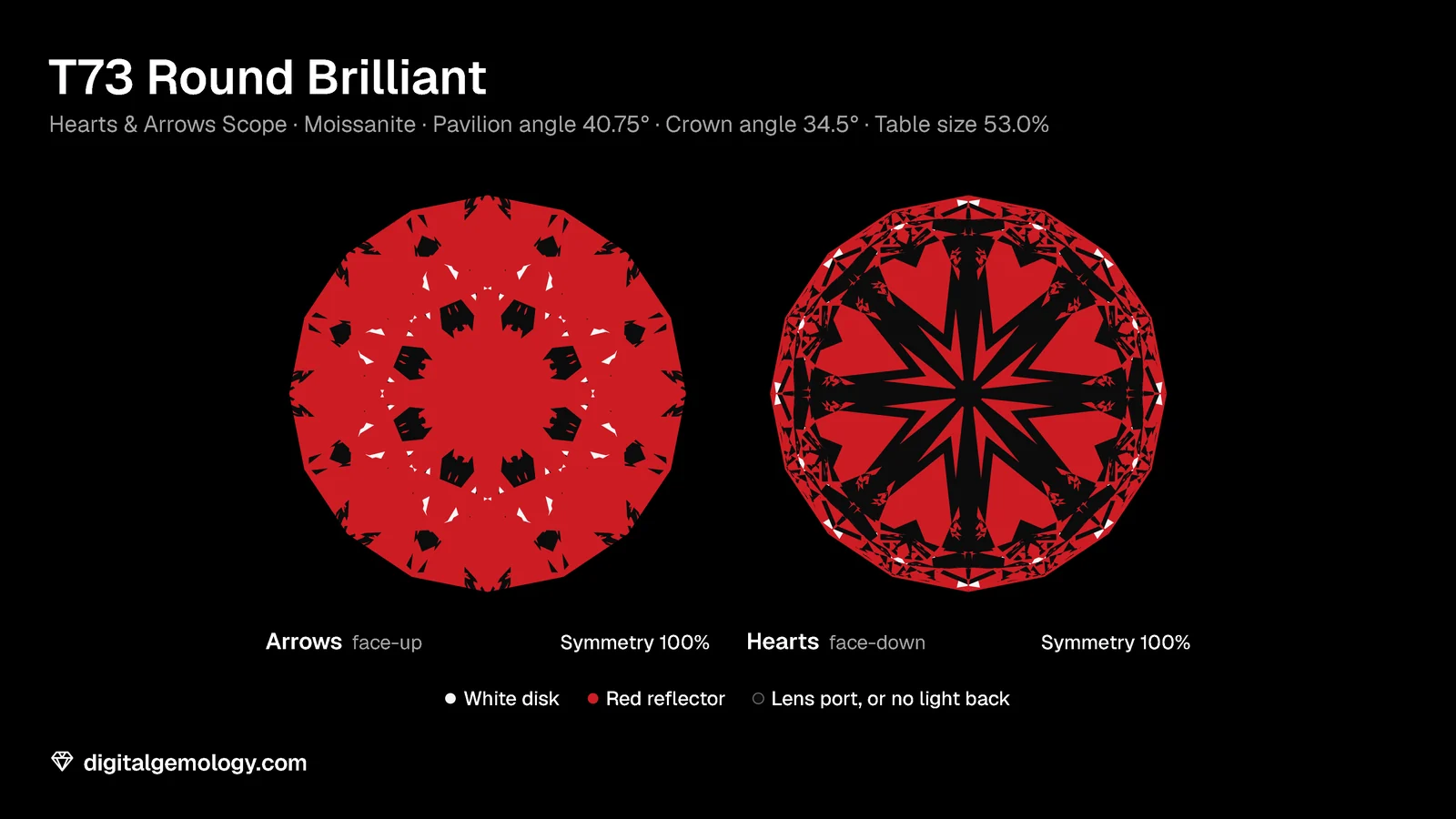
- Reset, and change the gemstone to moissanite. What happens to the pattern? Does the symmetry number change?
- Open Cut Performance Wheel with
?cut=t73-round-brilliant&stone=diamond. Set the comparison cut to the T57, Tolkowsky's 1919 plan.
What the Scope and the Wheel show
Precision you can see. Tiny changes in twist, angle or spacing, far too small to see face-up, break the hearts and arrows. That's the whole value of the pattern: it turns the cutter's precision into a picture anyone can check. The Central Gem Laboratory makes the same point. Numbers can judge proportions, but symmetry was hard to judge, even for the trade. So they devised a way to judge it from the reflection image.
Not a light-performance test. In moissanite, the pattern falls apart while the symmetry stays perfect. The pattern needs perfect symmetry, and also angles that suit the stone's refractive index. We bring the hearts back in Moissanite's refractive index, and why it needs its own cut. We change only the pavilion and crown. The reverse holds too: the Central Gem Laboratory notes that the pattern can appear in stones whose overall cut grade is below the top. A crisp pattern says the facets match each other. Whether the crown and pavilion angles work together to bring the light back is a separate question.
On the scoreboard. The T73 scores 93 / 78 / 80 against the T57's 92 / 79 / 72. Brilliance and fire barely move, because the angles are the same. Scintillation rises because of the 16 girdle facets. Symmetry is 100, leakage 2%. In our models, hearts and arrows needs no new angles: the T73 shows the pattern on Tolkowsky's own. What it demands is precision. What it gave buyers is a way to see that precision.
Who grades it. There's no single standard.
- In Japan, labs set their own.
- GIA and AGS don't grade hearts and arrows. An "H&A" inscription on their report only means the submitter asked for it.
- IGI and GCAL apply H&A standards.
Key points
- After 1919, Tolkowsky's proportions became the basis for ideal cuts. The lower girdle facets slowly grew longer, and later this shaped the hearts.
- The instrument came first. Reflector viewers (FireScope research 1977–1984) judged cut by returned light, and cutters began to cut stones to perform in them (EightStar, 1985).
- Kinsaku Yamashita named the cut Hearts and Arrows (1988) and patented his viewer (US 5,260,763, granted 1993). The best patterns show at about 15–20° off the axis.
- The pattern needs opposite facets to match in angle and direction, in 3D. That is a stricter symmetry than a lab's symmetry grade.
- It shows precision, not light performance. The T73 scores 93 / 78 / 80 with symmetry 100, but the same stone in moissanite loses the pattern.
Go further: our DG-Broken Hearts and Arrows is the T73 with 16 narrow extra facets on the pavilion. They put a thin red crack in every heart, on purpose.
Try it free
- Hearts & Arrows Scope: See the arrows face up and the hearts face down as you change the cut.
- Cut Performance Wheel: Compare brilliance, fire and scintillation of two cuts, or one cut in two stones.
Free, in your browser, no account.
Quick quiz
Five questions on this lesson, a couple of minutes. Pick an answer and see at once if you got it, and why.
Cuts in this lesson
We sell the files of these cuts: 3D models and cutting files, with a personal-use license.
-

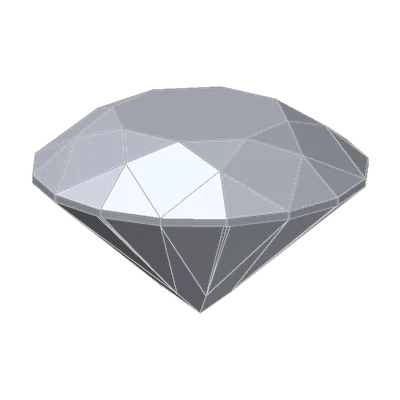
DG-Broken Hearts and Arrows Cut
3D files and cutting files, €9.99 each
View cut: DG-Broken Hearts and Arrows Cut
Keep exploring
- Next lesson: Past the 1919 ceiling: DG-Miliano and the modern brilliant
- Try another topic · Diamond anatomy and proportions: The parts of a diamond: crown, girdle and pavilion
Previous lesson · Historic diamond cuts: the history of the brilliant: all lessons · All topics